A seven-day fasting study tracking roughly 3,000 blood proteins has found that the most substantial biological changes in the human body do not begin until participants have gone approximately three days without any calories, suggesting the effects of prolonged fasting reach well beyond simple fat metabolism. The findings were published in Nature Metabolism following work by researchers at Queen Mary University of London’s Precision Healthcare University Research Institute (PHURI) and the Norwegian School of Sports Sciences.
What the seven-day fasting study actually measured
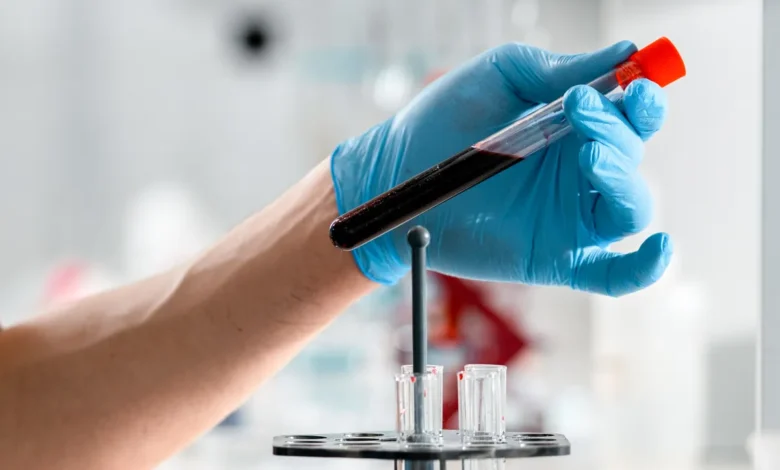
Twelve healthy volunteers completed a seven-day water-only fast under close daily monitoring. Researchers measured changes in approximately 3,000 proteins in participants’ blood before the fast began, at intervals throughout, and again after eating resumed. Those protein measurements were then combined with genetic data from large population studies to investigate which biological pathways were shifting and to predict possible health consequences.
The energy-supply change was the first to appear. Within the opening two to three days, the body began drawing more heavily on stored fat as glucose from food disappeared. Participants lost an average of 5.7 kilograms over the seven days, with the reduction coming from both fat mass and lean mass. Three days after eating resumed, overall weight remained below its starting point, but most of the lost lean mass had returned while the reduction in fat mass held.
The more consequential finding involved what the researchers detected from roughly day three onward. At that threshold, distinct and coordinated changes in protein levels began appearing across multiple organs simultaneously. About one third of all proteins measured changed significantly during the fasting period, with effects linked to all major organs. Crucially, some of those changes could not be explained by weight loss alone. One example was altered levels of proteins associated with the structural support of neurons, the specialised cells that transmit information throughout the nervous system.
Fasting versus weight loss: the protein count matters
A key question in fasting research is how much of any observed biological change is caused by fasting itself, and how much is simply a consequence of losing weight. According to PubMed Central, the study found that 452 proteins were significantly associated with fasting, compared with only 49 associated with weight change. That gap is worth pausing over: it suggests the act of complete calorie restriction is doing something biologically distinct from merely reducing body mass.
The paper was published by EurekAlert! on 1 March 2024. Claudia Langenberg, Director of Queen Mary’s Precision Health University Research Institute, said: ‘For the first time, we’re able to see what’s happening on a molecular level across the body when we fast. Fasting, when done safely, is an effective weight loss intervention. Popular diets that incorporate fasting, such as intermittent fasting, claim to have health benefits beyond weight loss. Our results provide evidence for the health benefits of fasting beyond weight loss, but these were only visible after three days of total caloric restriction, later than we previously thought.’
That timing qualification is worth holding onto. Intermittent fasting, which typically involves much shorter windows without food, may not produce the same molecular responses this study documents. The results do not establish that a 16-hour fast, or even a one-day fast, triggers the same coordinated whole-body shift detected at around the three-day mark.
The risks alongside the potential benefits
The picture is not entirely encouraging. A later proteomics study involving prolonged water-only fasting, reported by ScienceDaily, found evidence of increased inflammation, platelet activation, and changes in blood clotting-related pathways during extended fasting periods. That matters when interpreting claims about fasting as a health intervention: the same extended fast that appears to produce potentially beneficial molecular changes may also activate pathways associated with cardiovascular risk. The current study does not resolve that tension, and the researchers make no claim that it does.
Maik Pietzner, Health Data Chair of PHURI and co-lead of the Computational Medicine Group at Berlin Institute of Health at Charité, said: ‘Our findings have provided a basis for some age-old knowledge as to why fasting is used for certain conditions. While fasting may be beneficial for treating some conditions, often times, fasting won’t be an option to patients suffering from ill health. We hope that these findings can provide information about why fasting is beneficial in certain cases, which can then be used to develop treatments that patients are able to do.’
That is the longer-term ambition here. If specific molecular pathways responsible for the potentially beneficial effects of fasting can be identified, it may become possible to develop treatments that activate those pathways without requiring patients to stop eating entirely for several days. For people whose medical conditions make prolonged fasting unsafe, or who cannot follow fasting-mimicking approaches such as ketogenic diets, that possibility could be clinically useful. The study’s molecular map of the body’s fasting response is, the researchers argue, a foundation for that work, not a finished answer.