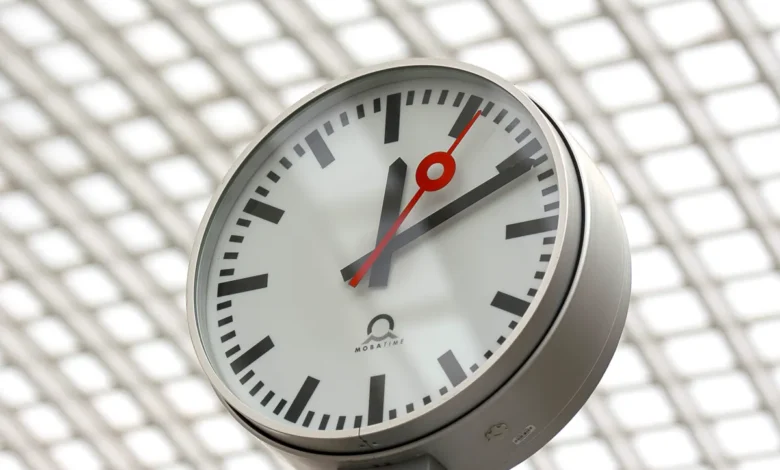
Delegates from 69 countries have voted to replace the leap second with the leap hour, ending a correction mechanism that has disrupted computer systems for more than half a century. The vote took place at a conference in Versailles held by the International Bureau of Weights and Measures, as reported by the Guardian. Under the new arrangement, coordinated universal time (UTC) can drift by up to an hour from astronomical time before any correction is needed, but that threshold is unlikely to be reached for thousands of years.
The decision aims to reduce the risk that computer systems, telecommunications networks and power grids face each time a leap second is inserted or, in a scenario that has never yet arisen, removed.
What the leap second actually is, and why it became a problem
Leap seconds are a product of two clocks that do not agree. In 1955, Louis Essen and Jack Parry at the UK’s National Physical Laboratory (NPL) built the world’s first practical, high-precision caesium atomic clock. By 1967, the astronomical definition of a second, based on the Earth’s rotation, had been abandoned; the formal definition became 9,192,631,770 caesium-atom vibrations. Such atomic clocks keep time with extraordinary precision and stability, but the Earth’s rotation is not: it is affected by the planet’s molten core, ocean shifts, global jet streams and other forces.
Because the Earth’s spin has been broadly slowing, officials added 27 leap seconds between 1972 and the present to keep UTC aligned with astronomical time. The adjustment worked for decades, but the strategy carried a technical cost. A minute containing 61 seconds, or one containing 59, can confuse software that assumes every minute has exactly 60.
‘After the leap second applied in 2012, there were some computer systems whose operating systems couldn’t cope with 61 seconds in a minute. The servers froze, they seized up. Systems went offline. And those are the sorts of failures that can happen with positive leap seconds,’ said Dr Setnam Shemar, a principal scientist in NPL’s time and frequency department, who was a member of the international timekeeping expert committee that put forward the leap hour proposal. Among the affected services in 2012 were Reddit and LinkedIn; Qantas flights also experienced delays.
What pushed the vote forward
The Versailles meeting was brought forward by a fresh technical concern. In the past decade, the Earth’s rotation has sped up rather than slowed, raising the prospect of a negative leap second, in which a second would need to be subtracted from UTC. That has never been done before, and the NPL’s Shemar said the untested nature of negative leap seconds compounded the risk: ‘There could be software out there that hasn’t been tested on negative leap seconds because we’ve never had to apply one before.’ Testing all the relevant interconnected systems globally, he explained, would cost companies a fortune. The source story states there was a 30% probability of a negative leap second in the next decade, and it was this concern that Shemar said swung the vote.
The UK has historically been reluctant to abandon leap seconds because of their link to Greenwich mean time. Russia also opposed the change, citing concerns about the impact on its Glonass satellite navigation system.
A decision deferred, not resolved
The new policy means UTC can accumulate up to an hour’s drift from astronomical time before any intervention is needed. Shemar framed the leap hour as a manageable adjustment, noting: ‘We already have daylight saving where we change by an hour and no one gets bothered about that, apart from losing sleep or getting an extra hour’s sleep.’
Not everyone at the conference was entirely satisfied. Dr Christian Bizouard, director of the IERS Earth Orientation Centre in Paris, which tracks changes in the Earth’s rotation and issues notices when leap seconds must be added, approved of the outcome but was candid about what it means in practice. ‘It’s kind of a philosophical discussion, because if a leap hour happens, it won’t be for a very, very long time,’ he said. ‘What we are doing is pushing back the decision.’
The Bureau’s decision to adopt the leap hour is set to apply from 2027, though whether any leap hour will actually be needed remains a question for timekeepers far in the future.