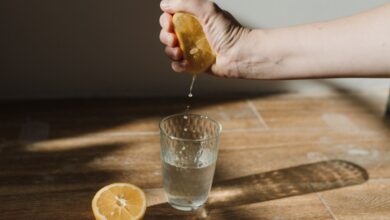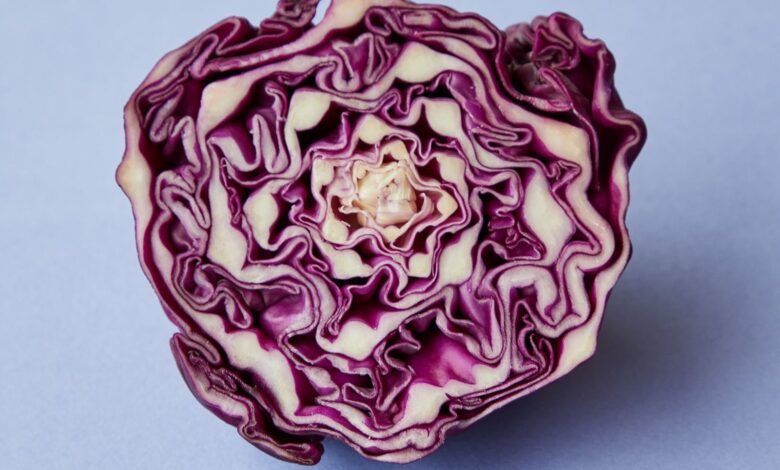
Red cabbage juice changes colour depending on what you mix it with. Add lemon juice and it turns pink. Add a pinch of bicarbonate of soda and it goes blue or green. That makes it an indicator: a substance that shows whether a liquid is an acid or an alkali. You can make it from half a cabbage and use it to test a whole shelf of kitchen liquids.
What you need
- A quarter to half of a red cabbage
- Hot water from a kettle (adult only), or a blender and cold water
- A large heatproof jug or bowl and a sieve
- Six or more clear glasses or jars (clear plastic cups are fine)
- Things to test, such as lemon juice, white vinegar, bicarbonate of soda, tap water, milk, lemonade, and a little washing-up liquid
- A teaspoon and a pen and paper to record your results
Time: 30 minutes, most of it waiting for the cabbage. Age: 5 and up, with an adult handling the hot water.
Making the indicator
- Chop the cabbage into small pieces and put them in the jug.
- Adult: pour in enough just-boiled water to cover the cabbage. Leave it for about 15 minutes, until the water is a deep purple and has cooled down.
- Strain the liquid through the sieve into a clean jug. Throw the cabbage on the compost or use it for cooking.
- No kettle? Blend the chopped cabbage with cold water for a minute, then strain it. It works just as well.
Testing kitchen liquids
- Pour a few centimetres of the purple juice into each glass.
- Keep one glass as it is, so you can compare colours.
- Add a teaspoon of a different test substance to each of the other glasses. For powders such as bicarbonate of soda, stir in half a teaspoon.
- Write down the colour of each glass.
- Line them up from the reddest to the greenest.
What the colours mean
| Colour | What it tells you | Kitchen examples |
|---|---|---|
| Red or pink | Acid | Lemon juice, vinegar |
| Purple | Close to neutral | Tap water |
| Blue | Weak alkali | Bicarbonate of soda in water |
| Green to yellow | Stronger alkali | Washing soda (adult use only, see safety) |
Exact shades vary with the cabbage, the water and how much you add, so treat the chart as a guide. Tap water in hard-water areas can make the juice slightly blue on its own.
What is happening?
Red cabbage gets its colour from pigments called anthocyanins. The same family of pigments colours blueberries, red grapes and many flowers. Their molecules change shape slightly depending on how acidic or alkaline the liquid around them is, and each shape absorbs light differently, so you see a different colour.
Scientists measure acidity on the pH scale, which runs from 0 to 14. Below 7 is acidic, 7 is neutral and above 7 is alkaline. The cabbage indicator turns red in acids, purple near neutral and blue, green or yellow as the liquid becomes more alkaline. It is a rough version of the universal indicator paper used in school labs.
The Royal Society of Chemistry has a classroom version of this experiment, and the Royal Horticultural Society has a schools version that ties it to soil pH in the garden.
A colour-change trick
Pour some indicator into a glass with a little bicarbonate of soda so it turns blue. Now add vinegar a few drops at a time. It fizzes, and the colour shifts back through purple to pink as the acid cancels out the alkali. This is called neutralisation.
Safety
- The adult handles the boiling water. Let the cabbage water cool before children touch it.
- Only test food and mild household substances. Do not use bleach, oven cleaner, drain cleaner or descaler. They are strong enough to burn skin and eyes, and bleach destroys the colour anyway.
- Washing soda (sodium carbonate) is an irritant. If you test it, an adult handles it with gloves and keeps it away from eyes.
- Do not drink the test mixtures, even the ones made from food.
- The juice stains fabric and worktops. Wipe spills straight away.
Make it a fair test
- Use the same amount of indicator and the same amount of each test substance.
- Can you rank five fruit juices from most to least acidic?
- Make indicator paper: soak strips of kitchen roll or coffee filter in the juice, let them dry, and dip them into the test liquids.
Common questions
How long does red cabbage indicator last?
A few days in a covered jar in the fridge. After that it starts to smell and the colours get less clear. You can freeze it in an ice cube tray for later.
Do other foods work as indicators?
Many do, because they contain the same kind of pigment. Try blueberries, blackberries or red onion skins and compare them with cabbage. Beetroot is coloured by a different kind of pigment and changes much less.
For more experiments, see our guide to science experiments for kids to do at home.