Jonathan Alexander Abt is an experienced orthodontic consultant who worked on a range of complex cases during his time at Luton and Dunstable Hospital, including surgical orthodontic and cleft lip and palate cases. This article will look at children’s teeth and how parents can instil good oral health and hygiene practices in their children from an early age.
A healthy diet is integral to good oral health. After the age of 12 months, parents should avoid giving their child a bottle at bedtime, as this may lead to tooth decay. They should also avoid sugary food and drinks between meals, providing only plain water or milk instead. Diluted fruit juice and squash should be confined to mealtimes, as these are highly acidic and can cause tooth damage. Fizzy drinks, even sugar-free versions, should be avoided completely, as these are highly acidic and damaging to teeth.
It is crucial for children’s teeth to be brushed last thing at night, with no food or drink consumed afterwards. Baby teeth start to come through at around six months of age, although this may be later or earlier in some children. Children usually have all their baby teeth by the age of three, with adult teeth coming in at around age six. Baby teeth may not be permanent, but they are nonetheless incredibly important, holding the space for adult teeth. If a child’s tooth is removed early the space can close, leading to crowding and giving rise to the need for orthodontic treatment later on.
As soon as their first teeth start coming through, parents should help their child brush their teeth at least twice a day using a fluoride toothpaste. Children should be encouraged to spit after brushing without rinsing the mouth, as this reduces the protective element of toothpaste.
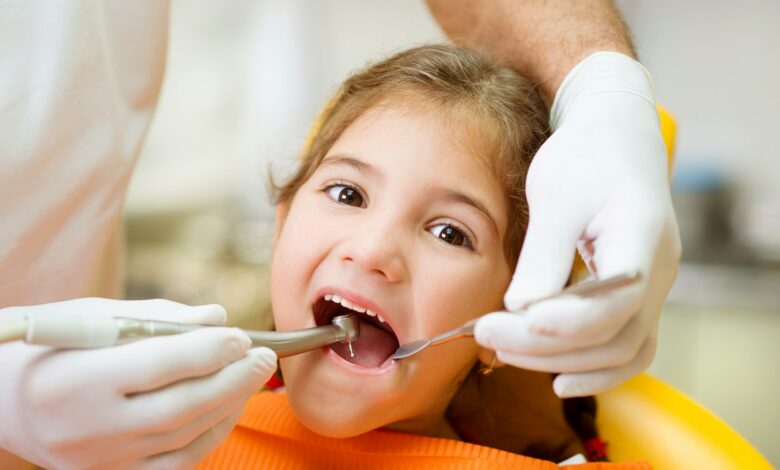
Dental decay can cause pain and infection in young people. The good news is that it is avoidable. In addition to brushing their teeth morning and night, parents should take their children to the family dentist regularly as soon as their teeth start to come through. Getting children into the habit of attending regular dental checkups helps establish healthy patterns for later life. Taking a child to the dentist only when they have toothache, on the other hand, creates a negative connotation with visiting the dentist.
For children up to the age of three years, parents should use a soft toothbrush with just a smear of toothpaste. They should use infant toothpaste containing no less than 1,000ppm fluoride, gently brushing all teeth. Children aged three years and older can use a children’s toothbrush with a small head along with a pea-sized amount of toothpaste containing between 1,350ppm and 1,500ppm fluoride.
Children are not capable of brushing their teeth effectively themselves until at least seven years of age. However, it is sensible to let them try, providing them with a toothbrush but finishing off the brushing for them. Experimenting with different toothpaste flavours can make the process more appealing. Children should be encouraged to brush for two minutes, with parents supervising and finishing off with a follow-up brush. Children aged seven plus should be able to brush their own teeth, although it is still a good idea for parents to observe the process to ensure they are brushing properly and for long enough.
Fissure sealants are a highly effective means of protecting teeth and warding off cavities. They are applied by the dentist when the back teeth start to come through at around six or seven years of age, then reapplied when all of the back teeth have emerged between eleven and fourteen years of age. The treatment involves applying a special thin plastic coating to chewing surfaces to keep food particles and germs out, protecting the teeth from decay for up to four years.