A new study combining the FAST DESI star formation study’s paired datasets has produced a finding that complicates one of astronomy’s tidier narratives: the universe is making stars at less than half the rate it managed 4.5 billion years ago, yet it has not meaningfully run short of the hydrogen needed to do so. The research, led by scientists from the Chinese Academy of Sciences (CAS) and published in Nature Astronomy on 1 September 2026, challenges the assumption that a depleting gas supply is the primary engine of cosmic star formation decline.
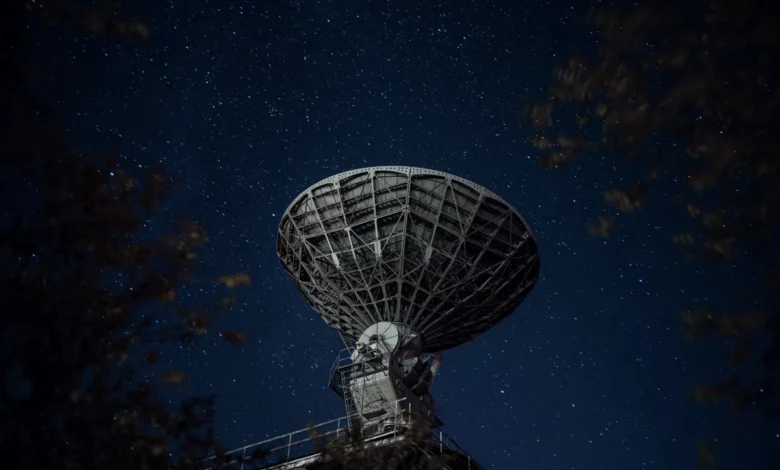
The team used China’s Five-hundred-metre Aperture Spherical radio Telescope (FAST) to measure neutral atomic hydrogen across the past 4.5 billion years, combining those radio observations with optical spectroscopy data from the Dark Energy Spectroscopic Instrument (DESI) project covering roughly 2.5 million galaxies spread across nearly one-third of the sky. The scale of that dataset is worth pausing on: previous surveys either had the sensitivity or the coverage, rarely both. This combination, the researchers say, provided a statistically precise picture of how the universe’s neutral hydrogen (HI) reservoir has changed over that period.
What the FAST DESI star formation data actually show
The headline result is a mismatch between two quantities that, under conventional thinking, ought to move together more closely. The cosmic star formation rate was approximately 2.5 times higher 4.5 billion years ago than it is today. Over that same window, however, the density of neutral atomic hydrogen was only about 1.4 times higher than its present level. Star formation declined sharply; the HI reservoir did not.
To extract those numbers, the researchers used a technique called HI spectral stacking. Because the 21-centimetre radio emission line that betrays the presence of neutral hydrogen is extremely faint in distant galaxies, individual detections are typically swamped by background noise. The team used precise redshift measurements from DESI to align and stack the weak signals from millions of galaxies, allowing the average HI signal to surface from the noise floor. The approach is not new in principle, but applying it to a sample of this size gave the results an unusually high statistical weight.
The CAS-led team describes their findings as shifting the central question in galactic evolution research. It is no longer, they say, a matter of whether the gas is depleting. The question becomes why it is increasingly difficult to form stars when neutral hydrogen reserves remain relatively abundant.
Conversion, not depletion, may be the deeper problem
Stars do not form directly from neutral atomic hydrogen. HI sits at an intermediate stage: it must first be converted into molecular hydrogen, which condenses into the dense clouds where new stars are actually born. The researchers suggest that what may be changing is the efficiency of that conversion step rather than the overall size of the HI reservoir.
According to Courthouse News Service, the researchers propose that as the supply of gas from the cosmic web weakens and gas becomes less dense, HI may be converted into molecular gas less efficiently. Under that reading, galaxies are not starved of raw material in any straightforward sense; they are becoming less capable of processing what they have. The overall HI level stays relatively stable while the molecular hydrogen that directly fuels star formation gradually dwindles.
This framing places the emphasis on the baryon cycle, the broader circulation of gas between galaxies and the cosmic web, rather than on simple consumption. As the flow from the cosmic web slows and densities fall, the conditions needed to convert HI into star-forming molecular clouds become harder to achieve. The gas persists; the stars do not follow.
The researchers are careful not to claim this as a complete explanation. Their language is conditional throughout: galaxies may become less efficient at conversion; changes in the baryon cycle may account for the discrepancy. What the data establish more firmly is that a straightforward gas-depletion story does not fit the observations.
The collaboration involved scientists from the National Astronomical Observatories of China, the Shanghai Astronomical Observatory of CAS, and Shanghai Jiao Tong University, alongside researchers from DESI-affiliated institutions across Asia, North America, and Europe. The team says the FAST-DESI combination provides a new observational benchmark for studying the cosmic gas cycle during the universe’s later evolution and the long-term decline in star formation, with the full dataset available for further analysis as modelling of the baryon cycle develops.