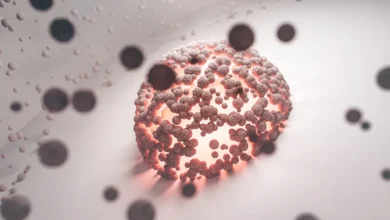
A previously unknown microbe found in the Asgard archaeon Shark Bay discovery, published in Current Biology, has given researchers the first direct visual evidence of an ancient microbial partnership that may mirror the origins of complex life on Earth. The team, co-led by UNSW Sydney, the University of Technology Sydney, and the University of Melbourne, captured images of an Asgard archaeon physically connected to a bacterium by extremely thin, tube-like structures called nanotubes.
What the Asgard archaeon Shark Bay discovery actually shows
The newly identified archaeon has been named Nerearchaeum marumarumayae. According to The Brighter Side of News, samples were obtained from subsurface layers of ancient microbial mats in Hamelin Pool, part of Shark Bay’s World Heritage-listed environment in Western Australia. Stromatolites and microbial mats still form there today, which is part of what makes the site useful: it offers a living system that may resemble conditions on early Earth.
The bacterial partner in this relationship has also been identified. PubMed records the associated bacterium as Stromatodesulfovibrio nilemahensis, a detail absent from most accounts of the study. The two organisms appeared to complement one another chemically, each producing compounds the other could use, including vitamins, nutrients and hydrogen.
The images were produced using electron cryotomography, a high-resolution 3D imaging method capable of resolving structures at the scale of a millionth of a millimetre. Researchers also observed the archaeon producing chains of budded vesicles alongside elaborate tube-like structures. The physical connection between the two microbes, mediated by bacterial nanotubes, is described as the first of its kind to be directly imaged.
A long-standing evolutionary idea, now with visual evidence
One established hypothesis in evolutionary biology proposes that the first eukaryotic cell (the type of cell that makes up all plants, animals and humans) arose through an intimate partnership between an ancient archaeon and a bacterium. The idea holds that one organism eventually engulfed the other, a relationship that ultimately produced mitochondria, the energy-producing structures inside complex cells. What has been missing is direct evidence of what such an early partnership might have looked like in practice.
Associate Professor Brendan Burns, an evolutionary microbiologist at UNSW Sydney, says the find may provide a model for that process. ‘This could be a little model for how these kinds of partnerships started and ultimately formed eukaryotes,’ he says. The Asgard archaea are believed to be closely related to the ancestors of eukaryotes, which is why isolating a living member of this group and imaging its interactions with a bacterial partner carries weight for researchers working on this question.
Getting to that point required years of effort. ‘It took four or five years in the lab,’ A/Prof. Burns says. ‘A lot of time, optimizing and chasing different shadows.’ Asgard archaea are notoriously difficult to cultivate outside their natural habitats, and the team was never able to grow the organisms in pure culture. A/Prof. Burns says that difficulty may itself be informative: ‘The fact that we could never get these organisms into pure culture is probably because they always depend on other organisms to survive.’
Co-author Associate Professor Debnath Ghosal from the University of Melbourne says the imaging result moves the field forward. ‘This discovery brings us a few steps closer towards understanding how complex cells evolved from relatively simpler microbial life forms,’ A/Prof. Ghosal says.
The team also applied deep learning to predict protein structures within the microbes. Co-author Associate Professor Kate Michie from UNSW says this approach allowed researchers to ‘start to see ancient versions of the cellular machinery that later became central to complex life.’
Co-author Associate Professor Iain Duggin from the University of Technology Sydney points to what he describes as the remarkable duration of such partnerships. He says it is worth considering that microbes may have maintained relationships like these for millions of years in harsh microbial mat environments, eventually contributing to the emergence of complex life.
The naming of Nerearchaeum marumarumayae involved consultation with Kymberly Oakley, described in the research materials as the world’s foremost Malgana language expert, and with Malgana elders, whose connection to Shark Bay is recognised by Native Title. The name combines a reference to Nereus, the ancient Greek sea god, with the Malgana word marumarumayae, meaning ‘ancient home’. Malgana elders granted permission for their language to be included in the scientific name, so that the culture could be recognised and celebrated.
A/Prof. Burns says he now hopes to identify additional microbial partnerships and expand what he calls a ‘little primordial Asgard soup,’ giving researchers more material to work with as they probe the earliest stages of eukaryotic evolution.