Alan Cartwright

-

Planky Open Banking Expo appearance: what the platform claims to do
Planky, the FCA-regulated Open Banking and AI platform, is set to demonstrate its full product suite at the Open Banking Expo UK & Europe 2026, where the Planky Open Banking Expo stand will offer live walkthroughs of a platform that the company says handles connection, enrichment and decisioning in a single place. The claim is worth unpacking. Planky describes itself…
Read More » -

Quorum sensing gum disease research points to enzyme-based plaque control
A study published in npj Biofilms and Microbiomes suggests that targeting quorum sensing in gum disease research, specifically by disrupting the chemical signals bacteria use to coordinate behaviour, can shift dental plaque toward species associated with better oral health, without eliminating the microbial community outright. The research comes from scientists at the College of Biological Sciences and the School of…
Read More » -

Colorectal cancer in young patients often reaches Stage III or IV before diagnosis
A study of 84 patients aged 21 or younger has found that colorectal cancer in young patients is frequently diagnosed only after it has reached Stage III or IV, raising questions about whether warning signs are being taken seriously enough in younger age groups. The findings were presented at the American Academy of Pediatrics 2026 National Conference & Exhibition, held…
Read More » -

Colombia Bre-B adoption rate outpaces Pix, backed by hard transaction data
The Colombia Bre-B adoption rate has now surpassed that of Brazil’s Pix at the equivalent stage, according to an analysis by EBANX drawing on data from the central banks of both countries, combined with adult population figures from the United Nations and the Brazilian Institute of Geography and Statistics. Within its first year, Bre-B reached 83% of Colombian adults, compared…
Read More » -
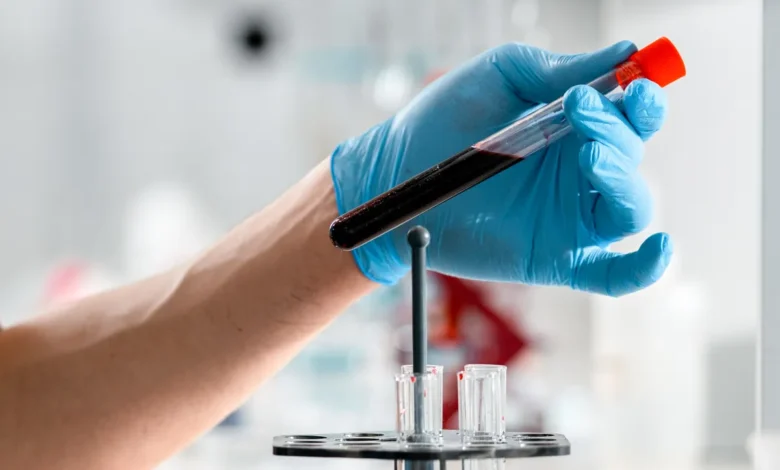
Seven-day fasting study maps the molecular changes that only emerge after day three
A seven-day fasting study tracking roughly 3,000 blood proteins has found that the most substantial biological changes in the human body do not begin until participants have gone approximately three days without any calories, suggesting the effects of prolonged fasting reach well beyond simple fat metabolism. The findings were published in Nature Metabolism following work by researchers at Queen Mary…
Read More » -

AI cybersecurity in financial services: what the data actually shows
A body of survey data on AI cybersecurity in financial services is converging on a consistent problem: institutions know the threat is growing, but many are not ready for it. The latest addition to that picture comes from Cisco, whose report Relentless Defense: A global report about cybersecurity in the AI era draws on responses from 8,000 security leaders across…
Read More » -

Mobile fraud prevention strategies lag as scammers pocket $1.03 trillion
Mobile fraud prevention strategies are failing to keep pace with attackers who have quietly repositioned the mobile app as their primary execution layer, according to an analysis published by Guardsquare. The piece, timed to coincide with Open Banking Expo UK & Europe in London, argues that financial institutions are still treating the mobile client as a trusted black box while…
Read More » -

E-cadherin cell cleanup mechanism revealed in vertebrate embryo study
The E-cadherin cell cleanup mechanism has been identified by researchers working with live zebrafish and mouse embryos, showing that a protein long associated with holding epithelial tissues together also directs those tissues to engulf and remove nearby dead cells. The study, published in Nature Communications as article 8900 in volume 17, appeared on 27 August 2026, according to SciTechDaily. E-cadherin…
Read More » -

Ames Impact Structure Dating Revised by 100 Million Years, Pointing to Mass Extinction
New zircon dating has placed the Ames impact structure dating firmly in the Late Devonian, roughly 100 million years later than scientists had previously assumed, raising fresh questions about which ancient mass extinction the crater is actually connected to. The research, led by scientists at The University of Texas at Austin, was published in July in Meteoritics & Planetary Science.…
Read More » -
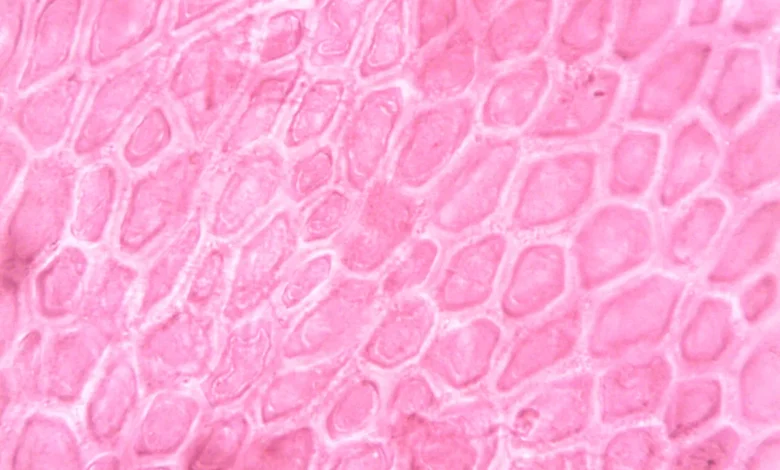
UBE2N enzyme MASH research points to new liver disease target
A preclinical study led by Cedars-Sinai has identified UBE2N enzyme MASH research as a credible new direction, finding that the enzyme UBE2N may slow the progression of one of the most common and difficult-to-treat liver conditions. The study was published in Nature Metabolism. An estimated 100 million people in the United States have metabolic dysfunction-associated steatotic liver disease (MASLD), formerly…
Read More »