Invisible ink lets you write a message that nobody can see until you know the trick to reveal it. There are two easy ways to make it at home. Lemon juice is the classic, and it appears when you heat the paper. Bicarbonate of soda is the safer choice for younger children, because it is revealed by painting over it with grape juice, with no heat at all. Both work because of real chemistry, which is explained below.
Method 1: bicarbonate of soda and grape juice (no heat)
What you need
- 1 tablespoon of bicarbonate of soda
- 1 tablespoon of water
- A cotton bud or a clean paintbrush
- White paper (printer paper is fine)
- Dark purple grape juice (red grape juice from the supermarket), and a second clean brush or sponge
Age: 4 and up.
Steps
- Mix the bicarbonate of soda and water in a small cup until most of it dissolves.
- Dip the cotton bud in the mixture and write your message on the paper. Use plenty of liquid and write in thick letters.
- Leave the paper to dry completely. This takes 20 minutes or so, or a few minutes with a hair dryer on a cool setting.
- To reveal it, brush grape juice lightly over the whole page. The writing appears in a different colour from the rest of the paper, usually a greyish blue or green against purple.
Method 2: lemon juice and heat
What you need
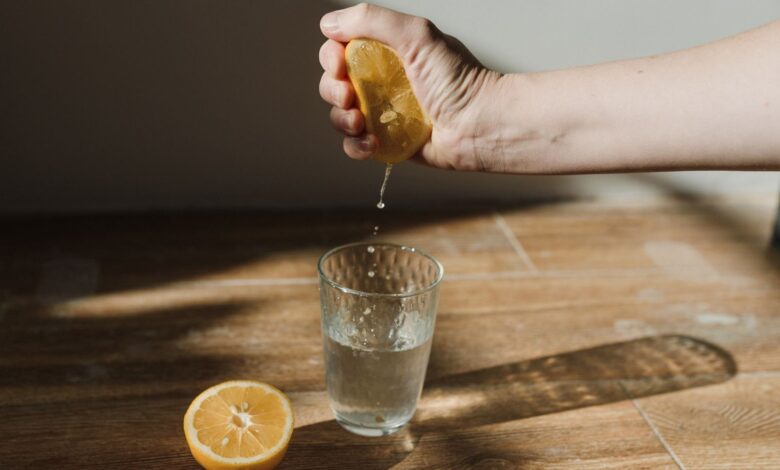
- Half a lemon, squeezed into a cup (bottled lemon juice also works)
- A few drops of water
- A cotton bud or a clean paintbrush
- White paper
- An iron with the steam turned off, set to a medium heat, and an adult to use it
Age: 6 and up, with an adult doing the heating.
Steps
- Mix the lemon juice with a few drops of water.
- Write your message with the cotton bud and let it dry. The writing will disappear as it dries.
- Adult: lay the paper on an ironing board, cover it with a thin tea towel, and run the iron over it slowly for a minute or so. Lift the towel to check.
- The writing appears as light brown letters. Keep heating gently if it is faint, but stop before the paper itself starts to turn brown.
Why does lemon juice invisible ink work?
Lemon juice contains sugars, citric acid and other carbon-based compounds. When it soaks into paper and dries, it leaves only a very thin, nearly colourless layer. Heating that layer makes the compounds break down and react with oxygen in the air, and some of the products are brown. It is the same kind of browning that happens to a cut apple left out, or to sugar when you make caramel.
The lemon also weakens the paper fibres slightly where it soaked in. Those areas scorch at a lower temperature than the clean paper around them, so the message turns brown first. If you kept heating, the whole sheet would eventually go brown and the message would be lost.
Why does the grape juice method work?
Bicarbonate of soda is a weak alkali. Purple grape juice contains pigments called anthocyanins, which change colour depending on whether they are in an acid or an alkali. Where the paper has bicarbonate on it, the juice meets an alkali and changes colour. Everywhere else it stays purple. This is the same chemistry as our red cabbage indicator.
People have been writing secret messages with juices and other liquids for at least two thousand years. The history of invisible ink on Wikipedia includes the plant juices described by Pliny the Elder in the first century and the invisible inks used by spies in both world wars.
Safety
- An adult always does the heating, and children stay clear of the iron. Never hold the paper over a flame, a hob or a candle: it can catch fire very quickly.
- Lemon juice stings in cuts and eyes. Wash hands afterwards.
- Bicarbonate of soda and grape juice are food, but once they have been on paper they are not for eating or drinking.
- Grape juice stains. Work on a tray or a wipe-clean surface.
Things to try
- Test other “inks”: milk, orange juice, apple juice, white vinegar or sugar water with the heat method. Which shows up best?
- Try the bicarbonate message with red cabbage juice instead of grape juice. Does the colour change?
- Write a message in both inks on one sheet. Can a friend work out how to reveal each one?
Common questions
Can you use a hair dryer to reveal lemon juice ink?
Usually not well. Most hair dryers do not get the paper hot enough to brown the juice. An iron on a medium setting is more reliable, used by an adult.
Does lemon juice ink work with a light bulb?
It did with old-style filament bulbs, which get very hot. Modern LED bulbs stay too cool to reveal the writing.
For more experiments, see our guide to science experiments for kids to do at home.