Drop a handful of Mentos into a bottle of Diet Coke and a fountain of foam shoots out of the top, sometimes several metres high. It looks like a chemical reaction, but almost nothing new is made. The fountain is gas that was already dissolved in the drink, escaping all at once. Here is how to do it safely and what explains it.
What you need
- A 2-litre bottle of Diet Coke, at room temperature
- A tube of mint Mentos, the kind most people use for this
- A sheet of paper rolled into a tube, just wide enough for the Mentos to drop through, and a card to hold under it
- An open space outdoors, away from cars, windows and people
- Safety glasses
Time: 10 minutes including the clean-up. Age: 5 and up, with an adult doing the drop for younger children.
Step by step
- Stand the bottle on flat ground outside and take off the lid. Make sure it cannot tip over.
- Load 5 or 6 Mentos into the paper tube, holding the card under the bottom so they do not fall out.
- Hold the tube straight over the open neck of the bottle.
- Slide the card away so all the Mentos drop in together, then walk away quickly. The fountain starts within a second.
- Everyone watching stands a few metres back and wears glasses.
What is happening?
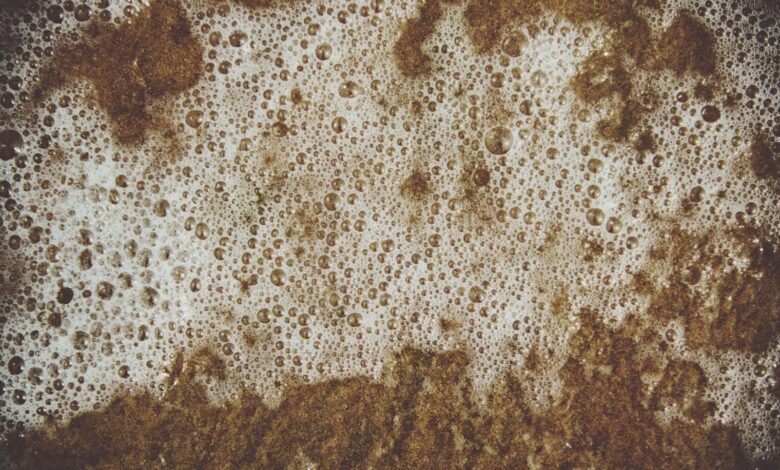
Fizzy drinks are bottled with carbon dioxide gas forced into them under pressure. When you open the bottle, the pressure drops and the gas starts to come out of the liquid, but it needs somewhere to start forming a bubble. Bubbles grow far more easily on a rough surface or a speck of dust than in the middle of smooth liquid. These starting points are called nucleation sites, and the faint stream of bubbles you see rising from a scratch in a glass comes from one.
A Mentos sweet looks smooth, but under a microscope its surface is covered in tiny pits and bumps. Each one is a nucleation site. Dropping several sweets into the bottle gives the gas millions of places to form bubbles at the same moment. The sweets are also dense, so they sink straight to the bottom and release bubbles all the way down the bottle. The gas rushes upwards and carries the drink with it out of the narrow neck.
A study by the physicist Tonya Coffey, published in the American Journal of Physics in 2008 (“Diet Coke and Mentos: What is really behind this physical reaction?”), tested different sweets and drinks with her students. They concluded that the rough surface of the Mentos was the main cause. They also suggested that some ingredients make the fountain bigger by lowering the surface tension of the drink, which makes bubbles easier to form: in Diet Coke, the sweetener aspartame and the preservative potassium benzoate. Caffeine made no difference in their tests. The American Chemical Society’s version of the experiment explains the same idea for younger readers.
Temperature matters more simply. Carbon dioxide dissolves less well in warm liquid, so a warm bottle releases its gas faster than a cold one.
Safety
- Do it outside only. The fountain is sticky and goes further than you expect.
- Never put the lid back on after adding the Mentos. A sealed bottle can build up enough pressure to burst or fire the cap off.
- Do not point the bottle at anyone, and wear safety glasses: a jet of fizzy drink in the eye stings.
- Do not drink fizzy drinks and eat Mentos at the same time to “try it inside you”. It will not make your stomach explode, as the internet myth goes, but it will make you feel uncomfortable and burp a lot.
- Rinse the area with water afterwards, or wasps will find it.
Ideas for a fair test
- Compare Diet Coke with regular Coke, lemonade and sparkling water. Which wins is a good question, because the published results do not all agree. Keep the bottle size, temperature and number of sweets the same.
- Try 1, 3, 5 and 7 Mentos. Does the height keep going up?
- Compare a fridge-cold bottle with one at room temperature.
- Roll a Mentos in a little cooking oil or crush it first. What happens to the fountain?
Film each fountain next to a wall or fence with known height markings, then pause the video at the highest point to measure it.
Common questions
Is Mentos and Coke a chemical reaction?
Mostly not. Carbon dioxide that was dissolved in the drink comes out as a gas. That is a physical change. A chemical reaction would make a new substance, as in the baking soda volcano.
Does it work with other sweets?
Any rough solid can start a fountain, rock salt included, but Mentos work better than most because they are both rough and heavy enough to sink fast. The Wikipedia article on soda geysers summarises the experiments that have been done.
For more experiments, see our guide to science experiments for kids to do at home.