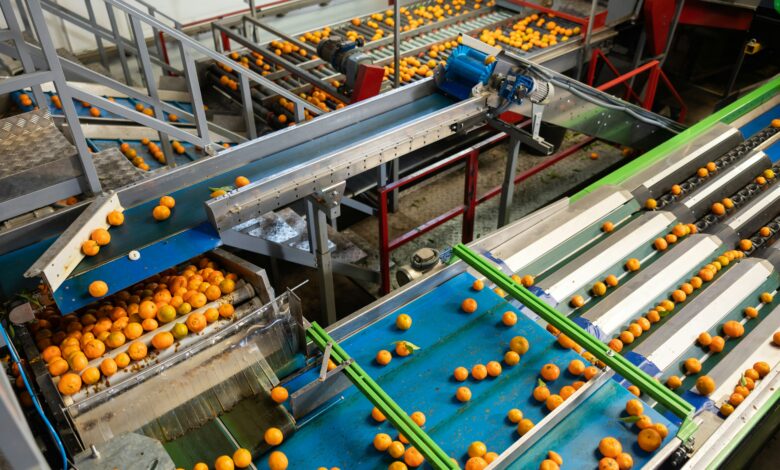
Conveyor belt systems are used across a variety of industries, from the pharmaceutical industry to food and beverage production. Each conveyor belt is made to fit the desired application, with large conveyor belts used in the quarrying and mining industry, and smaller examples used in customer-facing sectors like supermarkets and airports.
The longest conveyor belt in the world is 62 miles long (100km) and is located in the phosphate mines of Western Sahara. This giant conveyor belt is used to move around 2000 metric tonnes of phosphate rock every hour from the mine to the nearest city, where it’s then shipped across the globe. These large-scale heavy-duty conveyor belts are what help to get an industrial production line moving and keep daily operations running smoothly.
Conveyor belt cleaning brushes
Conveyor belts are in near constant use in factories, with production lines often running 24/7, and there is little room for error or downtime. With some conveyor belts moving items that can create debris and spills, like food and drink products, they can quickly become dirty, which may damage the internal mechanisms of the belt.
To combat these issues and eliminate the risk of damaging the conveyor belt, conveyor belt cleaning brushes are used along the system to remove any residual debris that has fallen onto the belt. Often called carryback, the dirt, dust and product particles that can build up from daily use can cause major issues for the production line, so conveyor belt cleaning systems are utilised to keep them clean and running efficiently. Using a conveyor belt cleaning system with brushes, rather than traditional rigid rubber scrapers, helps to remove fine dust and debris that other methods may miss.
Cleaning complex conveyor systems
Conveyor belt systems are not all created the same way. Each industry will utilise different types of conveyor belts to suit the needs of their business and will depend on the products and materials being carried. Some conveyor belt systems use a cleated or grooved belt to move products that require more grip than a traditional rubber belt can provide. Using a conveyor belt brush cleaning system is the preferred method of cleaning for these kinds of conveyors due to the brush bristles being able to safely move over any ridges in the belt and sweep out any trapped particles within the belt, where other methods can’t reach.
An alternative to using conveyor belt cleaning brushes is a standard metal, polyurethane or rubber scraper. The scrapers moving over the conveyor can damage these types of belts, so using a brush is a much better option.
Conveyor belt cleaning brushes are highly effective at sweeping away dry powders, like flour in the food industry or cement and sawdust in manufacturing. They are also ideal for removing wet, doughy, or sticky residues, and can be used alongside a cleaning solution for a deeper clean.
Why you need a conveyor belt cleaning system
Removes carryback
Carryback can cause issues throughout the production process if it’s not removed from the conveyor belt system correctly. Using conveyor belt brushes along the system keeps the bulk of the materials moving forward and directed to specific transfer points, rather than falling off the sides of the system onto the floor or getting clogged in the mechanisms.
Added protection
When cleaning the conveyor belt system while it is moving, the brushes remove any debris before it loops back into the return mechanisms and pulley systems. Having these systems in place prevents any product or waste from being caught in the moving belt, which can cause misalignment and damage to the belt.
Health and safety
Health, safety and proper hygiene are paramount in any industrial setting. In industries where workers can be exposed to hazardous chemicals, airborne particles or are working with heavy machinery, having safety systems in place isn’t just best practice, it’s the law. They are often subject to stringent health and safety regulations that require conveyor belt systems to undergo regular cleaning and maintenance. Having brushes in place along the conveyor system not only keeps the belt mechanism clear, but it also helps to keep the facility clean by removing slip hazards and dust particles.
Types of conveyor belt brush
Motorised helical roller brushes
Motorised roller brushes are used when large amounts of debris are produced from your production line and a helical, screw-like rotation is required to move substances away from your conveyor belt. These types of brushes are manufactured with either left or right hand spiral filaments and are fitted in opposing directions to efficiently remove material from both sides of the belt simultaneously. Typically, these spiral or tufted cylindrical brushes are driven by an electric motor which rotates them in the opposite or the same direction as the belt, depending on where you want waste to be deposited as they remove debris.
Strip brushes
Strip brushes are a low-cost alternative to using a motorised cleaning brush. These fixed brushes are positioned against the moving belt to provide continuous cleaning, usually at the end of the conveyor belt system before it loops. They can also run alongside the system to prevent products from falling off the belt by gently directing them away from the edge, while also acting as a barrier to trap dust and any small particles.
Suitable solutions for industrial settings
Each conveyor belt cleaning system should be specifically designed and engineered in a way that suits the facility and the products or items being transported along the conveyor belt. The suitable cleaning solution will depend on the industry where it is being used, but the essential part of the chosen conveyor belt cleaning method is that it removes carryback and helps to keep the production line running smoothly.
In industries where liquids and food products are being produced or handled, bacterial growth must be prevented by using hygienic brush bristles that can be used alongside cleaning products and automated washdown systems. Any industrial facilities handling bulk or raw materials, such as in the quarrying and mining industries, where large amounts of debris and dirt are commonplace, heavy-duty fixed brushes and scrapers should be used alongside cleaning brushes to ensure the process is as clean as possible and continuously remove any carryback.