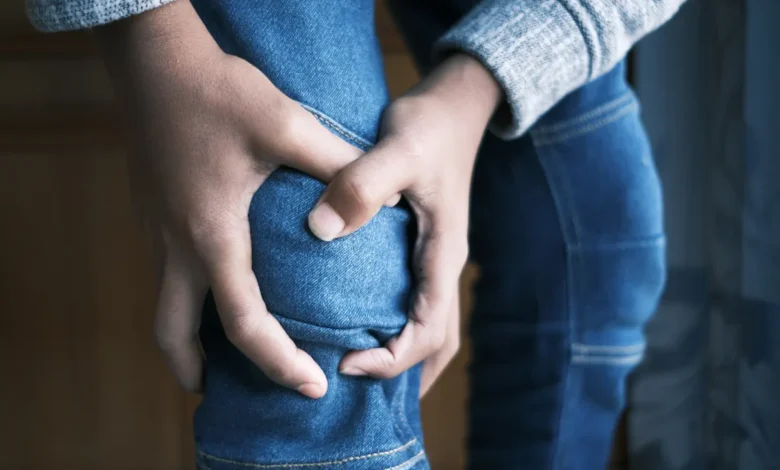
The claim that knee osteoarthritis lifestyle changes can meaningfully slow the condition’s progression is not fringe speculation: it is the position set out by Siteman Cancer Center, whose materials, originally written by Dr Graham A Colditz, form the basis of this piece. The question worth asking is what the evidence behind that claim actually looks like, and where it is stronger or weaker.
Knee osteoarthritis develops as the cartilage cushioning the bones in the joint gradually breaks down. As that protective layer thins, pain and stiffness follow, and they tend to worsen over time. Dr Abby Cheng, an orthopedic surgeon at Washington University School of Medicine in St Louis who also specialises in physiatry, the nonsurgical treatment and rehabilitation of conditions such as arthritis, describes the downstream effects plainly: ‘Osteoarthritis can cause knee pain and stiffness, which can negatively impact a person’s activity level, risk of falling, mood and general quality of life.’
The scale of the problem
The condition is extremely common. More than 30 million adults in the US have some form of osteoarthritis, and the knee is the joint most frequently affected. Despite its association with older age, roughly half of cases occur among people still of working age, meaning the economic consequences are real. Difficulty moving can mean missed work and lost income. It can also push people away from physical activity, which the materials note may in turn raise the risk of chronic conditions including heart disease, cancer and diabetes.
Cheng identifies several factors that raise individual risk: ‘Having weak leg muscles and being overweight or obese increases a person’s risk for knee osteoarthritis. Women, older adults, people with a prior knee injury and those with a family history of osteoarthritis are also more likely to have the condition.’ That list covers a mix of modifiable and non-modifiable factors, which matters when evaluating what lifestyle intervention can realistically achieve.
Knee osteoarthritis lifestyle changes: what Cheng actually recommends
For people who already have the condition, Cheng outlines a range of options. On diet: ‘Eating more plants and less processed or sugary food reduces inflammation in the body, which can reduce pain from osteoarthritis in all joints.’ On mechanical load: ‘Other common treatments for knee osteoarthritis include strengthening the thigh muscles, using knee braces, taking anti-inflammatory medications, getting cortisone and other injections, and sometimes having knee replacement surgery.’
The weight-loss figure Cheng cites is worth holding up for scrutiny, because it is striking on its face. For a person who is overweight, losing 10 pounds can reduce the stress placed on the knees by 40 pounds with every step. That is a 4:1 mechanical leverage ratio, and it is the kind of specific claim that deserves a primary source. The Siteman Center materials state it without citing a clinical study directly, so readers should treat it as a plausible estimate from a practising specialist rather than a figure drawn from a named trial.
Running, the materials note, does not automatically damage the knees, despite widespread belief to the contrary. Regular physical activity is presented as one of the strategies that may help reduce the chances of developing osteoarthritis in the first place. Diet, again, is mentioned in the preventive context: a pattern rich in whole grains, fruits and vegetables, while limiting processed and refined foods, ‘can support overall health and may help protect against osteoarthritis.’ The hedge ‘may’ is doing real work in that sentence, and it is fair to the actual state of the evidence.
Family history is not destiny
Perhaps the most practically useful point concerns genetic fatalism. ‘Some people think that because a parent or grandparent had osteoarthritis, they will develop it too,’ Cheng said. ‘And while it’s true that osteoarthritis can run in families, it doesn’t mean there’s nothing a person can do to successfully lower their risk of developing it.’
That is a reasonable position, and it is consistent with what is known about the condition’s multifactorial nature. The full Siteman Center materials, published on ScienceDaily on 20 August 2026, recommend working with a healthcare provider to develop an individualised management strategy, which is sound advice given how much individual circumstances vary. The list of available options is longer than many patients realise, and a number of them sit well within reach before any surgical conversation is needed.