When you’re pushing your trolley down the aisles of your local supermarket, browsing the seemingly endless shelves of food stacked high above your head, do you ever think to yourself, ‘Where does this all come from?’ From tins of beans to frozen chicken, food production is a key factor in our everyday lives.
There are roughly 12,000 food and drink manufacturing and processing factories across the UK that help fill supermarket shelves and our dinner plates. The food production industry is the nation’s largest manufacturing sector, contributing around £153.2bn to the economy and employing over 4 million people last year in 2025. But what’s it like inside one of the factories that help bring food to your table?
Special food production flooring
Starting from the ground up, the most important factors when dealing with any kind of food production are hygiene, safety and cleanliness – so even the floors in these facilities are made specially to suit.
Large food production facilities can have hundreds of workers across their factory sites, and keeping them safe is the top priority. One of the easiest ways to do this is to reduce the risk of slips, trips and falls and cross-contamination by installing a hygienic food production flooring with anti-slip and anti-microbial properties.
Not only do the anti-slip additives allow workers to walk around the facility with peace of mind, but the easy-to-clean nature of a bespoke food production flooring means there’s minimal downtime while cleaning is in progress.
Handling any food and drink products daily means there is a risk of spillages or food falling onto the floor, encouraging the growth of nasty bacteria. To minimise the risk of contamination, it’s important to have industrial food-grade flooring in the factory as standard throughout, to reduce the risk of transferring bacteria to any equipment used in the production process.
Strict hygiene standards
In a food production facility, maintaining food safety and preventing cross-contamination in food production is essential for adhering to the strict regulations. The facility must comply with laws such as the Food Safety Act 1990, and any regulations enforced by the Food Standards Agency (FSA). Following these guidelines ensures all food production facilities operate within the legal framework, keeping staff and consumers safe.
According to the legislation, facility owners and managers must identify any potential hazards, implement effective control measures, and keep up-to-date detailed documents of safety protocols and procedures. HACCP (Hazard Analysis and Critical Control Points) is used across the UK as a mandatory framework for identifying and managing food safety risks. The Food Hygiene (England) Regulations 2006 also emphasise the importance of proper hygiene practices across all stages of production.
If a facility is found to be in breach of these regulations and standards are falling short, they could be at risk of getting a hefty fine. Recently, a branch of Morrisons was fined over £700,000 due to its lack of cleanliness in its bakery section in-store – even in a small facility rather than a large food production factory, it’s important to maintain proper hygiene and safety standards.
Sustainable food production
Sustainability is becoming more important for food production facilities looking to reduce their environmental impact. Food production facilities are part of a much bigger picture, which starts with the farms where food products are grown and sourced, and ends when the food reaches supermarket shelves.
Sustainable food production creates a cycle where you produce enough food to meet people’s needs without over-saturating the market, exhausting natural resources or harming the environment. By using sustainable food production methods, you minimise waste, conserve resources, and promote sustainability in the wider food industry.
Machinery and production lines
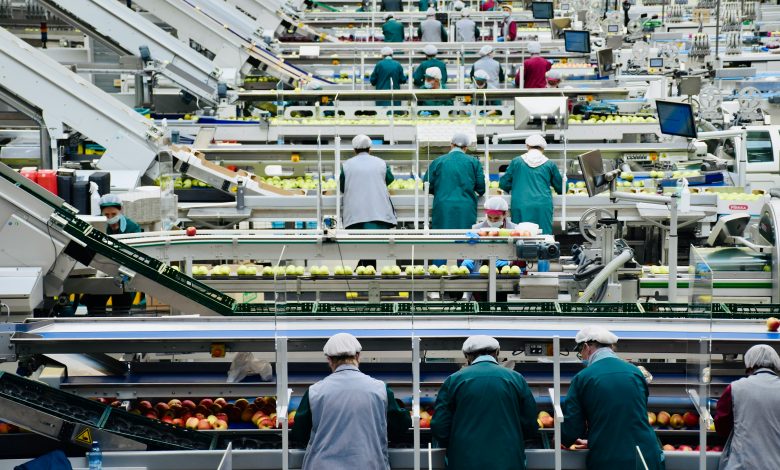
Food production facilities need to have the right machinery, technology and equipment in place to ensure high levels of hygiene and keep food products as fresh as possible when they reach your plate. Specialist machines enable different factories to facilitate their production lines. Things like food mixers, bakery equipment, meat processing machines, vegetable and ready meal preparation and flash freezing facilities all enable food facilities to speed up the production and reduce prep times.
Once the food is prepared to the high regulatory standards, the next step in the food production process is to package and ship the products. Despite the safety measures in place, it’s important to have checks towards the end of your production line, which can weigh or detect anomalies in your food products.
Metal detectors are used to ensure there’s no metal contamination within the products, which can have serious consequences for consumer health and a brand’s reputation. Advanced metal detection systems can be used to safely detect and reject even the smallest particles of metal, ensuring products meet safety standards.
In addition to metal detection, weighing products after manufacture is a crucial step in the quality control process. Checking the weight of a product allows you to verify that packaging contains the correct volume or number of items and ensures manufacturers are not giving away excess product or selling empty packaging by mistake. Checking the weight of items allows the manufacturer to maintain consistency, accuracy, and efficiency in the packaging process.
Leaving the factory
Once everything have been processed and packaged according to regulations, and after all the safety checks have been done, the products will leave the facility and head to their destination. Depending on the facility, food production factories will supply supermarkets, restaurants, wholesalers or directly to consumers. They’re usually shipped in large quantities in air-conditioned vehicles, which will keep the food fresh for longer and enable it to have a longer shelf life when it reaches its destination.
A high-pressure environment with high standards
There are a lot of standards to meet in food production – everything from the floor to products leaving the door! While it sounds like a lot to manage, it’s all in service of making sure the food we eat is safe – so when we’re walking the supermarket shelves, we don’t have to worry about hygiene and food safety!