A fresh analysis of CERN collision data has produced the most stringent results to date from the LHC quantum black hole search, ruling out the production of such objects below masses of roughly 9.0 to 11.4 TeV and constraining the number of extra spatial dimensions that certain theoretical models can accommodate.
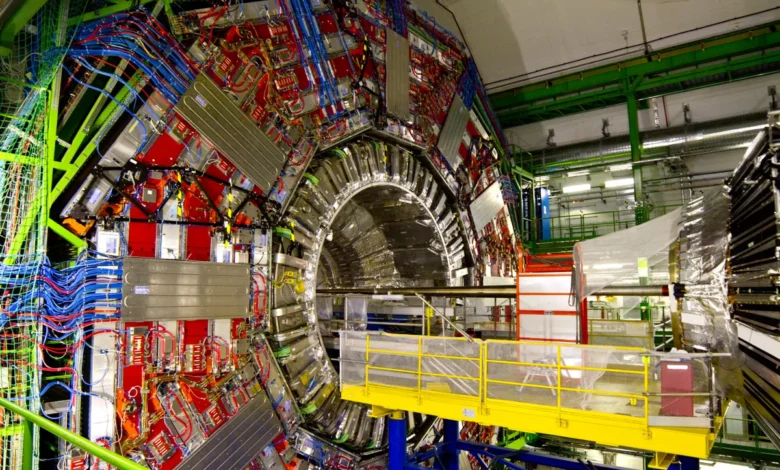
The work comes from researchers on the Compact Muon Solenoid (CMS) experiment at the Large Hadron Collider (LHC). Their paper, published in Progress in High Energy Physics, reports no evidence of quantum black holes or so-called sphalerons in CMS detector data collected between 2016 and 2018. That null result, the team argues, is itself a substantive finding: it eliminates a further region of theoretical parameter space and tightens the constraints future searches must work within.
What the LHC quantum black hole search actually found
The exclusion range matters because it extends meaningfully beyond what earlier CMS and ATLAS searches achieved with smaller datasets. According to the CMS Experiment, the study excludes black hole masses below approximately 9.0 to 11.4 TeV depending on the specific theoretical model being tested, a reach the collaboration describes as significantly greater than previous analyses. The broader result places an upper bound of around 12 TeV on where quantum black holes are unlikely to exist, given the models considered.
The constraints on extra spatial dimensions are also sharpened. For many scenarios, the presence of more than two extra spatial dimensions is now ruled out at the 95% confidence level, according to the CMS Experiment. String theory assumes a total of ten dimensions. ‘But these measurements say that, assuming the parameters of the theories we considered, you cannot have more than two,’ said Tamas Vami, a researcher conducting postdoctoral work under UCSB physics professor Joe Incandela.
Vami’s collaborator, Incandela Lab graduate student researcher Danyi Zhang, offered a useful framing of what exclusion results actually mean in practice. ‘Theories don’t predict one exact answer,’ Zhang said. ‘They predict a whole range of places a particle could be hiding. Each search clears out part of that range and says “not here,” and over time the map of where new physics could still be, shrinks.’ The Higgs boson, discovered in 2012, was found only after decades of experiments gradually closed off one energy region after another using exactly this logic.
Why extra dimensions and gravity are at the centre of the problem
The theoretical motivation for the search connects to one of the more vexing puzzles in fundamental physics: why gravity is so much weaker than the other fundamental forces. One proposed answer is that gravity is not intrinsically weak but rather that some of its strength is effectively lost into extra spatial dimensions that are too small to detect directly. If true, gravity would become considerably stronger at very short distance scales, and the energy required to produce a microscopic black hole might fall within what the LHC can achieve.
‘At the LHC, we’re colliding particles at extremely high energy, which corresponds to tiny distance scales,’ said Incandela. ‘As with microscopy, higher energies mean smaller wavelengths, allowing one to probe smaller distances.’ Researchers were probing scales as small as 10⁻²⁰ metres, a distance that, as Incandela put it, relates to the scale of an atom roughly as an atom relates to a human being.
Any quantum black holes produced under these conditions would bear no resemblance to the astrophysical variety. UCSB physics theorist Steven Giddings, one of the scientists who originally proposed that such objects could theoretically form, was direct about their nature: ‘They wouldn’t stick around very long, if you made one, it would disintegrate immediately.’ Without extra dimensions compressing gravity’s effective range, Giddings estimates that particle collisions would need to reach roughly a million billion times the energy currently available at the LHC even to approach the conditions needed.
A new analytical method debuts in particle physics
Beyond the physics result itself, the study introduced a technique that the researchers believe has broader applications. Working with UCSB particle theorist Nathaniel Craig and collaborators, the team deployed a method called phase-space distance, used here for the first time in a particle physics data analysis. The method feeds into a machine learning system called a Support Vector Machine, which distinguishes candidate signal events from the large background of conventional high-energy collisions.
In particle physics, phase space is a multidimensional representation incorporating properties such as energy, momentum, space and time. The phase-space distance method converts the relationships between events into a single score; higher scores indicate greater resemblance to the expected signal. ‘We compared phase space distance with the sphericity variable and our conclusion is that phase space distance outperforms sphericity,’ Zhang said. Unlike some machine learning approaches, the method is supervised, meaning researchers can inspect the underlying mathematics rather than treating the output as a black box.
The search also looked for sphalerons, theoretical unstable configurations of particle fields linked to the matter-antimatter asymmetry problem. No evidence for sphaleron processes was found either, allowing the team to place limits on how many particle interactions could involve such transitions.
The LHC is currently shut down for a major programme of upgrades. The future High Luminosity Large Hadron Collider will provide substantially larger datasets, giving the next generation of searches considerably more reach, and more opportunities to either detect or further exclude quantum black hole production at the energy frontier.