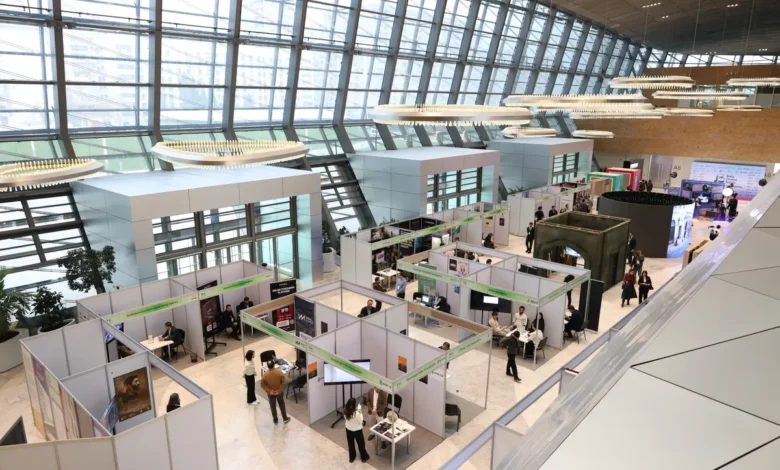
Open Banking Expo UK 2026 arrives at London’s Business Design Centre on 13 and 14 October, drawing more than 1,800 attendees and 200 speakers for what the organisers are billing as a pivotal moment for open banking, open finance and smart data. The claims are familiar from previous years, but the speaker roster and the programme structure offer some concrete substance worth examining.
What Open Banking Expo UK 2026 is actually putting on stage
The event spans four content stages each day, plus a dedicated podcast studio. The Main Stage carries the keynote addresses; separate stages are allocated to payments, open finance and, on day two, trust and identity. A new Question Time format is also being introduced, promising structured audience debate rather than the usual panel monologue.
The opening keynote on Tuesday 13 October falls to Andrew Self, who holds the position of head of department for open banking and open finance at the Financial Conduct Authority. His stated subject is ‘Moving from Open Banking into Open Finance: What’s needed to unlock the next chapter?’ According to the Open Banking Expo speaker list, Self joined the FCA from the Payment Systems Regulator, where he led the PSR’s work on open banking from 2022. That background gives his keynote a degree of regulatory continuity: he was shaping open banking policy at the PSR before moving to the body now tasked with developing the open finance framework. Whether his address will carry specific commitments or remain at the level of ‘direction of travel’ is, as ever, the more interesting question.
On Wednesday 14 October, Dr Ruth Wandhöfer, described by the organisers as an internationally recognised financial services and technology expert, takes the Main Stage with a keynote titled ‘The post-payments world: Open Banking, AI and the new architecture of value’. The framing is broad, covering how emerging technologies are said to be reshaping financial services. The session will need to do more than restate the AI-payments thesis to justify the billing, but Wandhöfer is a credible voice in this space and the subject matter is live.
Closing keynote and the wider programme
Maz Farrelly, the award-winning television executive behind productions including Big Brother and The X Factor, closes the Main Stage on day two. Her keynote, ‘Why be boring when you can be bad ass’, is positioned as a challenge to conventional business thinking, drawing on more than 30 years in television to argue that financial services has something to learn from showbusiness about attention, communication and experience design. It is a reasonable provocation, even if the distance from entertainment to regulated financial infrastructure can sometimes be overstated.
Beyond the keynotes, the Payments Stage will examine pay by bank, variable recurring payments and account-to-account transactions. The co-located Open Finance Show focuses on commercial models emerging from greater access to financial data. The Smart Data Stage on day one looks at how open banking principles might extend into other sectors, a question that has gained traction as the government’s smart data agenda has advanced.
More than 40 organisations will be exhibiting on the Expo floor, and the programme includes facilitated networking and The Engine Room podcast studio for longer-format recorded discussions.
The Open Banking Expo Awards 2026 will be held on the evening of Tuesday 13 October, recognising individuals, teams and organisations across the ecosystem. The organisers say this year saw a record number of entries, though no breakdown of categories or shortlists is provided in the pre-event materials.
Registrations remain open. The full speaker list and programme details are available via the Open Banking Expo speaker list, and the event takes place at the Business Design Centre in London on 13 and 14 October.