A consortium of researchers led by the Institute for Bioengineering of Catalonia (IBEC) has developed a class of photoswitchable small-molecule compounds, called prosthe6, and found that prosthe6 eye drops vision restoration was achievable in animal models of blindness without gene therapy, implants, or specialised lighting. The findings appear in the Journal of the American Chemical Society (JACS).
The claim is arresting. Two compounds in particular, prosthe6-12 and prosthe6-15, restored visually guided behaviour in blind mice after both injection into the eye and topical administration as eye drops. The treated mice spontaneously favoured darker areas over brightly lit ones, a preference that depends on a functioning visual system and that the animals had lost entirely due to photoreceptor degeneration. No training was required.
The problem these compounds are trying to solve
Photoreceptor degeneration underlies conditions including age-related macular degeneration (AMD) and retinitis pigmentosa (RP). Together, these disorders affect an estimated 200 million people worldwide and are among the leading causes of blindness. Vision loss carries a global economic burden put at over US$400 billion per year through healthcare costs and lost productivity.
When photoreceptors die, the retina’s deeper neural circuitry can remain largely intact but goes silent, receiving no light signals to pass toward the brain. That surviving circuitry is the target here. Existing approaches to reactivating it include gene therapy, which is suitable only for patients carrying particular mutations, and electronic retinal prostheses, which can be invasive, costly, and require significant training. Optogenetics and light-responsive drugs have also entered clinical testing, though restoring high-quality vision under ordinary illumination has remained difficult.
How prosthe6 eye drops vision restoration works
The prosthe6 compounds belong to the field of photopharmacology: their activity is reversibly controlled by light. A light-sensitive molecular switch is incorporated into the drug’s chemical structure. When light reaches the eye, the molecule changes shape, triggering signalling within the retina in a way the researchers describe as resembling the normal visual process.
The compounds target ON-bipolar cells, retinal neurons that normally receive signals from photoreceptors. More precisely, they act on a protein called mGlu6 within that surviving circuitry. Pedro de la Villa, co-leader of the study at the University of Alcalá (UAH), puts it plainly: ‘In healthy vision, ON bipolar cells play a key role in passing on information about the presence of light to the rest of the visual circuit. In degenerative eye diseases, although the photoreceptors are lost, much of this underlying circuitry remains intact but inactive. This creates a major therapeutic opportunity.’
In practice, prosthe6-12 and prosthe6-15 restored saccadic eye movements in blinded zebrafish larvae and restored light-avoidance behaviour in mouse models of both AMD and RP. The restored behaviour appeared at illumination levels described as comparable to indoor light or daylight on an overcast day, without any device to amplify or specialise the light source.
Rosalba Sortino, co-first author and postdoctoral researcher at IBEC, describes the strategy: ‘Our goal was to restore vision using a molecular mechanism that is as close as possible to how the healthy retina works. Instead of bypassing retinal processing, we aimed to reactivate it right at the same level of the retinal circuit as the lost photoreceptor cells.’
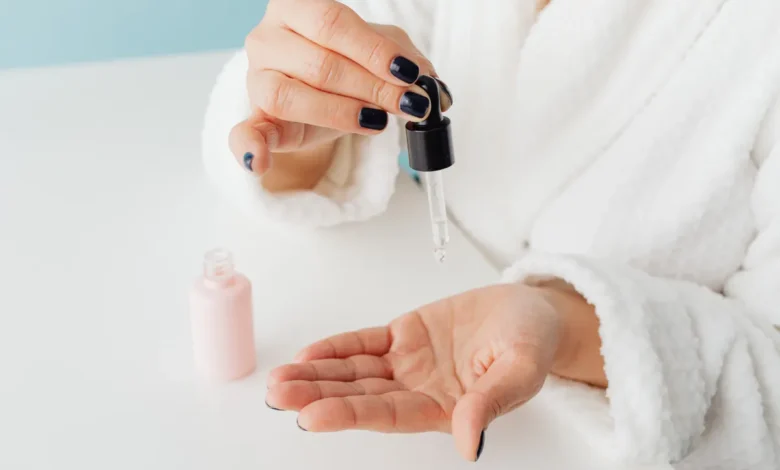
The researchers call the compounds ‘molecular prostheses.’ The molecules are small and water-soluble, which is what makes topical delivery as eye drops a plausible route rather than a theoretical one.
What has not yet been shown
The honest caveat comes from Pau Gorostiza, ICREA Research Professor at IBEC and co-leader of the study: ‘These molecules do not cure blindness, because they do not address the cause of photoreceptor degeneration. But they are remarkably effective at restoring sight, and they do so using a very simple and potentially patient-friendly approach.’
The work is still at the animal-model stage. Researchers are now studying safety and formulation, and working on extending how long the restored visual function lasts. The prosthe6 technology is protected by patent. The team is also working with Eyelumina, described as a spin-off company in formation, to secure investment for translational development and future clinical trials.
Context helps calibrate where this sits on the path to any treatment: the first-ever clinical trial of a photopharmacological drug for vision restoration (targeting an unrelated protein) has only recently been published, suggesting the broader field is moving from experimental research toward potential clinical use but has not arrived there yet. Gorostiza acknowledges the distance: ‘Turning this into a therapy is a long and laborious process. But the results show that there is a realistic possibility of restoring high-quality vision with drugs, non-invasively, reversibly and with a mechanism that is independent of the specific retinal disorder or genetic mutation to reach a majority of patients.’
The project builds on more than ten years of research and received funding from Fundaluce, CaixaHealth, the Government of Catalonia, and CIBER-BBN, among others. Sortino was awarded the Extraordinary Doctoral Prize for the 2023-24 academic year by the University of Barcelona for the thesis underpinning this work. The next test is whether prosthe6 eye drops and the vision responses they provoke can be reproduced in humans at all.