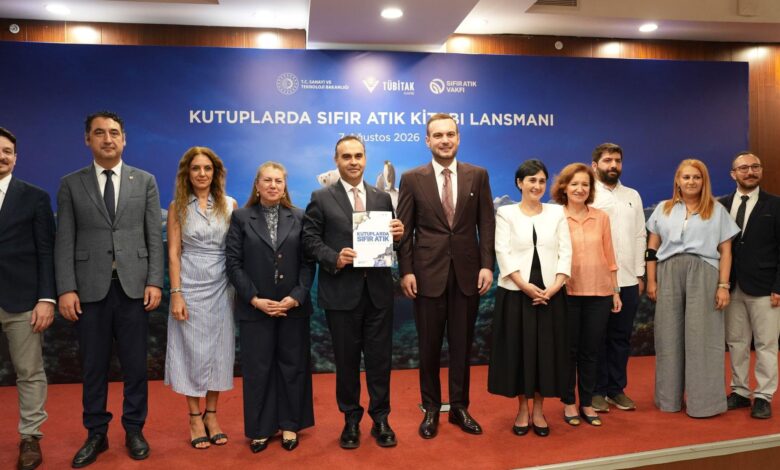
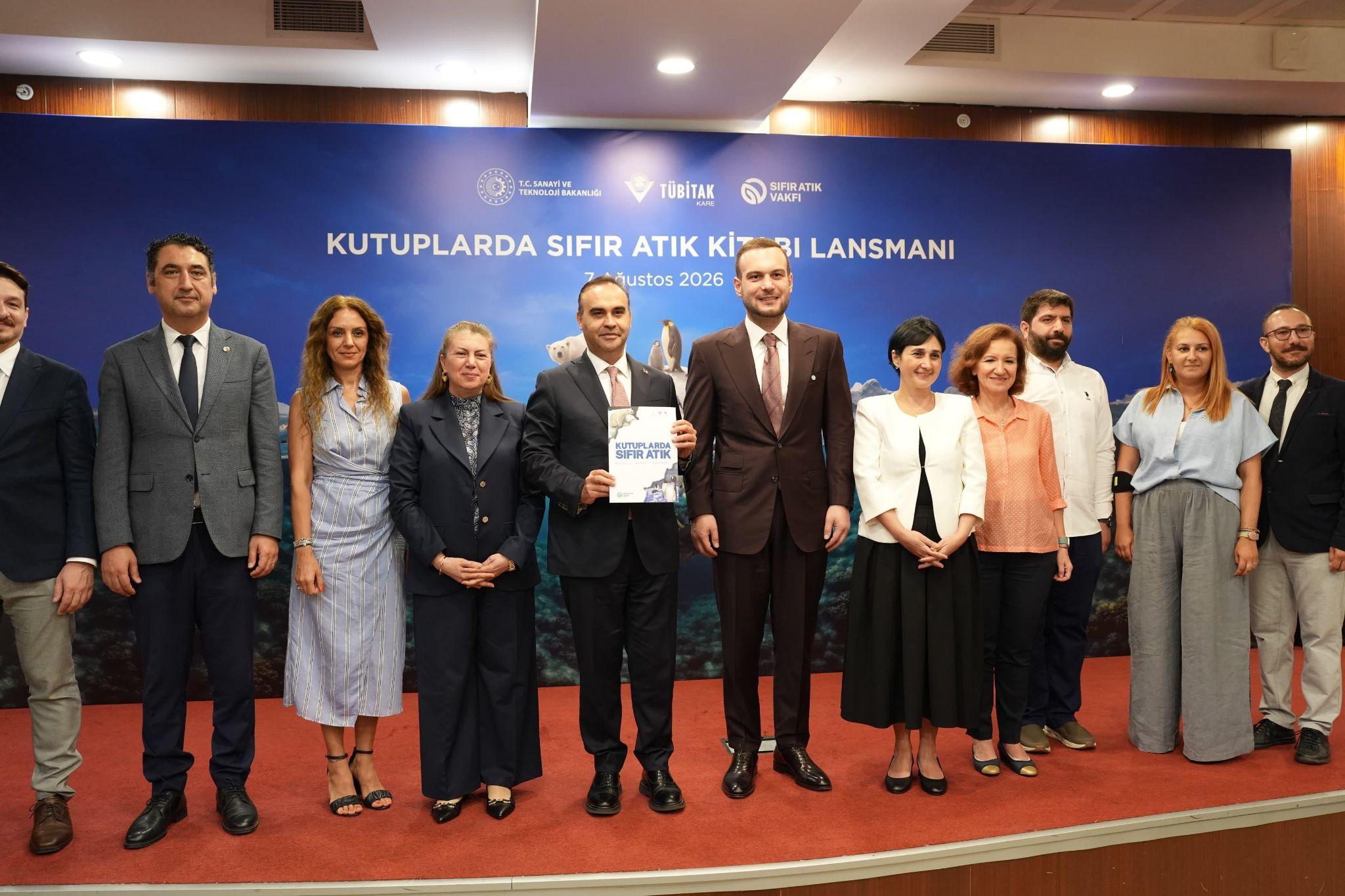
A new scientific publication is setting out how zero waste principles, more commonly associated with domestic recycling schemes, can be built into the planning and conduct of research expeditions in the Arctic and Antarctic. The book, “Zero Waste in the Polar Regions”, was launched on 7 August and brings together 18 articles written by scientists who have carried out polar fieldwork, addressing the scientific, technical, administrative and communication dimensions of applying zero waste thinking to research operations in some of the world’s most sensitive environments.
The publication was prepared jointly by The Zero Waste Foundation and the Polar Research Institute of TÜBİTAK, the Scientific and Technological Research Council of Türkiye. Rather than treating zero waste as a matter of waste collection alone, the contributors examine how scientific activity itself is planned, how materials and resources are sourced and used, and how energy, water and logistics are managed during expeditions to the poles. The stated aim is to reduce waste before it is generated, to use resources more efficiently, and to limit the environmental footprint of the research process itself, a distinction the Foundation’s own materials are keen to stress: zero waste, in this context, is not simply recycling or waste management by another name.
How zero waste principles are being tested in Arctic and Antarctic fieldwork
The book frames the polar regions as critical indicators of global climate change, arguing that environmental changes recorded there carry consequences well beyond the Arctic and Antarctic themselves. That framing is intended to give the work relevance to audiences and research communities operating far from the geography in which the underlying fieldwork took place, since the logistical and resource challenges of running a low-waste scientific operation in extreme environments may inform practice elsewhere.
Mehmet Fatih Kacır, Minister of Industry and Technology of Türkiye, said the book brought together two national initiatives that both began in 2017: Türkiye’s Zero Waste programme and its polar expedition programme. “The Zero Waste initiative launched under the leadership of H.E. Emine Erdoğan has grown step by step from a national initiative into a global one,” he said. He added: “At the same time, we began organising scientific expeditions to Antarctica and the Arctic under the auspices of the President of the Republic of Türkiye, enabling Turkish scientists to strengthen the country’s presence in polar research. Through this book, these two initiatives have come together.”
The publication also reflects the wider zero waste vision advanced by Emine Erdoğan, who founded the Zero Waste Movement, chairs the UN High-Level Advisory Board on Zero Waste, and holds the position of Honorary President of the Zero Waste Foundation. The involvement of TÜBİTAK’s Polar Research Institute situates the book within Türkiye’s established programme of scientific expeditions to Antarctica and the Arctic, giving the research base for its recommendations a direct link to fieldwork rather than to policy alone.
A new London link for research on waste and climate
Ten days after the book’s launch, on 17 August, the Zero Waste Foundation and London Climate Action Week signed a cooperation protocol covering climate action, zero waste and the circular economy. The agreement establishes an institutional partnership between the two bodies, intended to strengthen knowledge exchange, joint initiatives and international dialogue on zero waste and circular economy approaches.
The protocol was signed by Samed Ağırbaş, President of the Zero Waste Foundation and COP31 High-Level Climate Champion, and by Nick Henry, Climate Action Founder and CEO. London Climate Action Week brings together participants from government, cities, business, finance, academia, civil society and local communities, and the new agreement gives Türkiye’s zero waste and circular economy work, including the research base underpinning the polar publication, a direct connection to that network.
Ağırbaş said: “After this cooperation protocol, I hope we will carry out strong work and organize joint events at COP31 and London Climate Action Week.” The Foundation has framed the agreement as a practical mechanism for exchange rather than a one-off signing, with the expectation of collaborative activity continuing through both organisations’ networks in the period ahead.
The diplomatic backdrop: COP31
Both developments arrive as Türkiye prepares to host COP31, which provides a wider diplomatic context for the cooperation even though the immediate focus of the protocol is on practical exchange between the Foundation and the LCAW network. Taken together, the polar research publication and the London partnership are presented as linking scientific research, resource efficiency and circular economy thinking with international climate action, rather than treating zero waste as a narrower question of recycling or waste disposal.
For a research audience, the more immediate point of interest may be methodological: the book’s attempt to document, across 18 contributions from scientists with direct polar field experience, how resource use, energy, water and logistics can be planned and measured during expeditions to environments where waste removal and environmental protection carry particular constraints. Whether the approaches described prove transferable to other research settings, or are taken up more widely within the international climate science community that London Climate Action Week convenes, is likely to depend on how the underlying data and case studies are received and scrutinised by other polar researchers and by the wider zero waste and circular economy networks now formally connected through the new protocol.