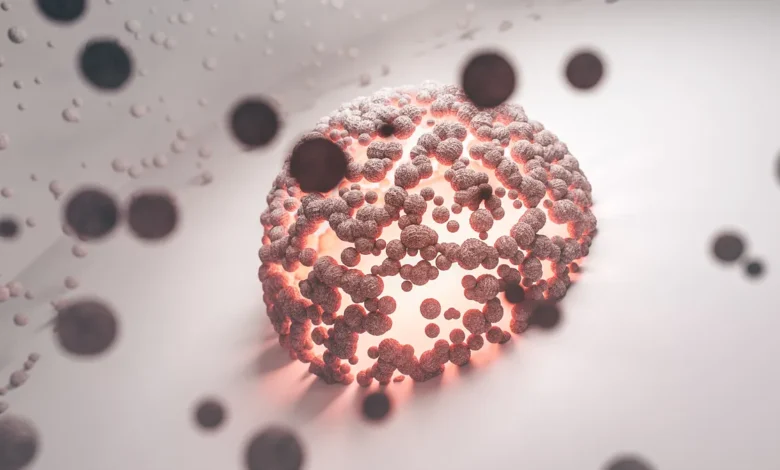
A magnetotactic bacterium has produced a magnetic bacteria lifespan extension of 43.39% in the roundworm Caenorhabditis elegans, according to research led by Prof. An Xu at the Hefei Institutes of Physical Science of the Chinese Academy of Sciences. The team says the main mechanism behind the effect is suppression of ferroptosis, a form of cell death driven by iron accumulation and oxidative damage to fats within cells.
The findings were published in Free Radical Biology and Medicine on 26 June 2026, according to SciTechDaily. C. elegans is a standard model organism in ageing research, chosen precisely because its short lifespan and genetic tractability make it practical for this kind of work.
What the magnetic bacteria lifespan extension actually involved
The bacterium in question is Magnetospirillum magneticum AMB-1, a magnetotactic bacterium (MTB) that produces internal structures called magnetosomes, which are membrane-bound crystals of magnetic mineral. MTBs have previously attracted interest for drug delivery and cancer treatment applications. Their potential influence on ageing had received far less attention before this study.
Worms fed AMB-1 saw their average lifespan increase by 43.39%. The treatment also preserved neurological function and intestinal integrity in older worms, two markers of healthspan rather than merely time alive. The researchers are careful to present these as effects observed in a worm model, not as conclusions transferable to humans without further work.
The role of magnetosome production was tested directly. Wild-type AMB-1, which produces magnetosomes normally, delivered the strongest longevity effect. A reversibly non-magnetotactic strain, RNM-AMB-1, produced a weaker effect. A fully non-magnetotactic strain, NM-AMB-1, did not extend lifespan at all. That gradient suggests magnetosome production is not incidental to the observed effect; the researchers say it played a major role.
Ferroptosis: the cell-death pathway at the centre of the findings
Ferroptosis has become an area of active research in ageing biology. It is characterised by iron build-up inside cells and the resulting peroxidation of lipids, a process that damages cell membranes. Unlike apoptosis, the more familiar form of programmed cell death, ferroptosis has only been formally described and named relatively recently, and its role in age-related decline is still being mapped.
In the worms treated with AMB-1, the researchers observed reduced iron accumulation and lower levels of lipid peroxidation. Genetic analysis pointed to several ferroptosis-related pathways involved in the lifespan effect, specifically genes ftn-1, bli-3, and ads-1. The team says these results establish AMB-1-mediated suppression of ferroptosis as the primary route through which the bacterium extends lifespan in this model.
It is worth being clear about what this does and does not show. C. elegans is a powerful research tool, but it is a millimetre-long soil-dwelling worm with a nervous system of 302 neurons. Interventions that extend its lifespan frequently fail to translate to vertebrate models, let alone to clinical medicine. The researchers themselves frame the findings as foundational evidence, not as a ready-made therapeutic. They argue the results support broader investigation of MTBs in geriatric medicine, which is a claim about research direction rather than clinical readiness.
What the study does contribute is a plausible mechanism, a dose-response-style gradient across magnetosome-producing strains, and a named set of genetic pathways to interrogate further. Those are testable claims, which puts this work in a better position than many anti-ageing announcements that offer an effect without any mechanistic account of how it arises.
The research team at the Hefei Institutes of Physical Science, Chinese Academy of Sciences describes the findings as establishing a new microbial strategy for anti-ageing intervention. The next step, as the researchers frame it, is broader investigation of whether MTBs can be applied in geriatric medicine. What form that investigation takes, and in which organism, will matter considerably for how seriously those claims can eventually be taken.